
Basketball continues to grow across Asia, producing world-class talent and creating global superstars who inspire

Basketball fans often celebrate superstars like Nikola Jokic, Luka Doncic, Stephen Curry, and Giannis Antetokounmpo.

Basketball fans often focus on the NBA, but some of the world’s most talented players

Basketball has become a truly global game, and the top international basketball players 2026 continue

The most improved nba players list is one of the most exciting annual discussions for

How Good Was Bob Pettit? Bob Pettit was one of the greatest players in early

No, Bob Pettit was not a reserve player. He was a full-time starter and franchise

What are Bob Pettit’s stats? Bob Pettit put up incredible numbers during his NBA career,
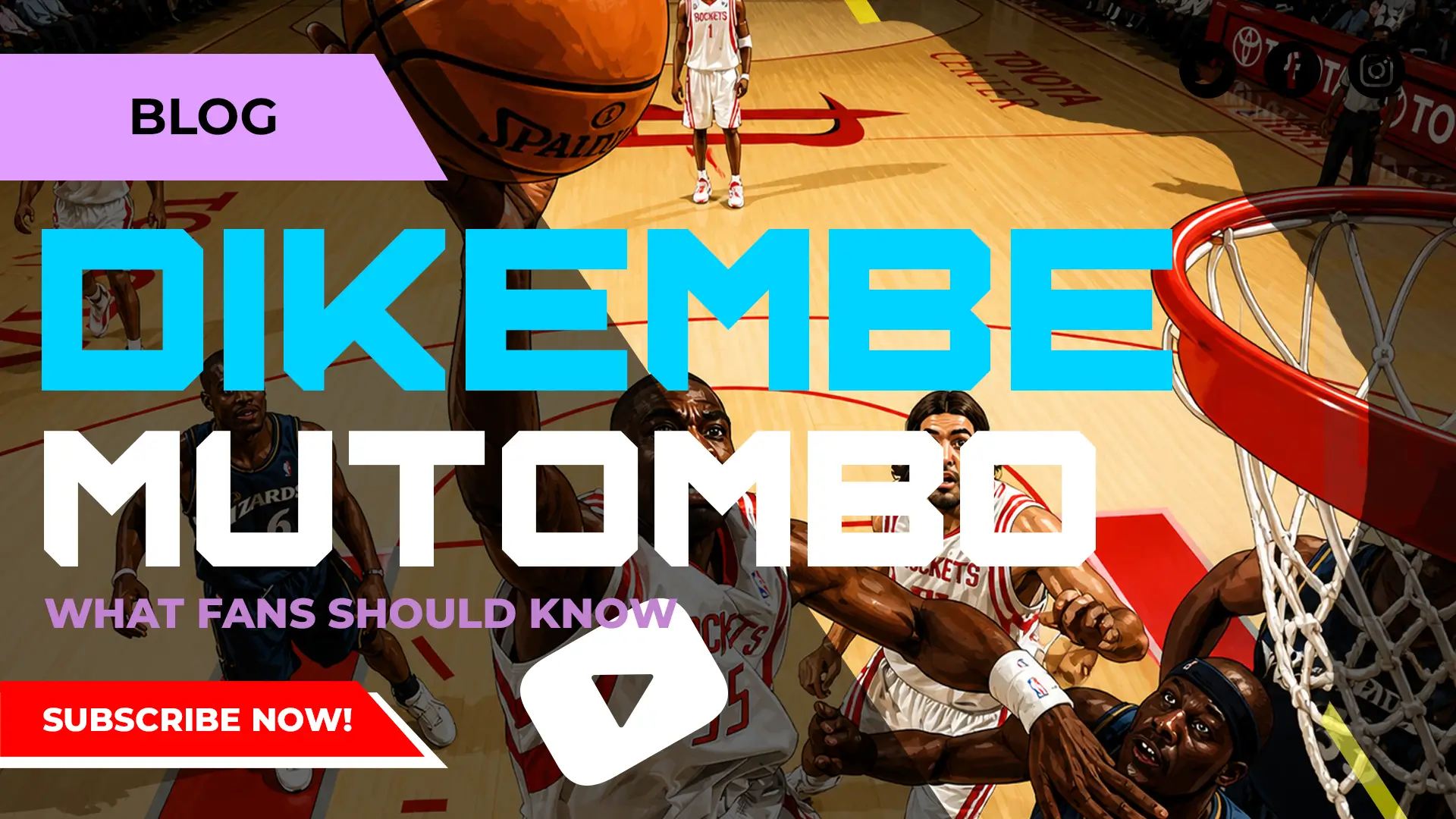
When people search for dikembe mutombo stats, they want one thing: a clear look at

What Position Did Dominique Wilkins Play in the NBA? Dominique Wilkins primarily played as a

Basketball player analysis looks beyond the box score to explain how a player performs, what makes that player effective, where improvement is needed, and how the player fits within a team’s system.
A useful analysis combines statistics, game film, position, role, decision-making, physical tools, defense, offensive skills, and team context. Official NBA statistics, for example, provide traditional, advanced, tracking, shooting, passing, rebounding, and defensive data that can support a deeper evaluation.
For Filipino fans, this approach can be applied to NBA stars, PBA players, Gilas Pilipinas players, and international basketball talent.
Basketball player analysis is the process of breaking down a player’s performance and understanding what happens on the court.
A basic review might focus on points, rebounds, and assists. A deeper analysis asks different questions:
These questions reveal the difference between statistics and actual basketball impact.
A player’s skills can be divided into several areas.
Scoring: Evaluate finishing, shooting, pull-up jumpers, three-point shooting, post moves, and free-throw generation.
Playmaking: Look at passing, court vision, pick-and-roll decisions, ball handling, and turnovers.
Defense: Examine on-ball defense, help defense, closeouts, defensive rotations, steals, contests, and rim protection.
Rebounding: Consider positioning, box-outs, effort, timing, and ability to secure contested rebounds.
Off-ball play: Watch cutting, screening, relocation, spacing, and movement without the ball.
Film is particularly useful because some contributions do not appear clearly in a box score. Scouting guidance commonly recommends reviewing possessions, identifying strengths and weaknesses, comparing players with peers, and considering team fit.
NBA player analysis often combines detailed statistics with film and role evaluation.
The NBA’s official statistics platform includes shooting zones, catch-and-shoot numbers, pull-up shooting, drives, passing, touches, defensive impact, and opponent shooting information.
This allows analysts to ask more specific questions.
For example, a guard may score efficiently because of strong finishing at the rim, while another relies heavily on pull-up jumpers. Two players with similar scoring averages can therefore have very different offensive profiles.
Defensive analysis also requires context.
A player with few blocks can still be an excellent defender if they consistently stay in front of ball handlers, provide help, communicate, and force difficult shots.
The goal is to understand how production happens.
PBA player analysis should account for the player’s role within Philippine professional basketball.
Scoring, rebounding, assists, shooting efficiency, turnovers, steals, and blocks provide a useful starting point.
But team role matters just as much.
A primary scorer may face aggressive defensive attention every possession. A role player might receive fewer touches but provide important perimeter defense, screens, rebounding, or floor spacing.
Game context matters as well.
A player’s performance against a strong defensive team may reveal different strengths from a game against an opponent with weaker perimeter coverage.
PBA analysis should therefore consider individual production alongside team strategy and competition.
Gilas player analysis requires additional attention to international basketball.
National teams often have less practice time than professional clubs, so players must quickly understand their responsibilities.
A Gilas player may be asked to defend a particular opponent, space the floor, create shots, rebound, or provide interior defense depending on the matchup.
International competition also creates different tactical challenges.
A player who succeeds in the PBA may have a different role against a national team with bigger forwards, physical guards, or different defensive schemes.
The most useful Gilas analysis therefore asks whether a player’s skills translate effectively to the international level.
Identifying player strengths and weaknesses requires looking for repeated patterns rather than isolated plays.
A strength should appear consistently.
For example, a player may regularly beat defenders off the dribble, make accurate skip passes, contest shots effectively, or create efficient scoring opportunities.
A weakness should also be supported by evidence.
A player may struggle against pressure defense, have difficulty finishing through contact, lose track of shooters, or become less effective when forced to play away from a preferred position.
Good analysis should explain the difference between a genuine weakness and a situation where the player’s role simply does not suit the matchup.
It should also avoid treating weaknesses as permanent. Players can improve shooting, decision-making, strength, footwork, and defensive awareness through development and experience.
Basketball playing style describes how a player naturally operates within a game.
Some guards are pass-first creators. Others are scoring guards who attack off the dribble.
Some forwards thrive as three-and-D players, while others operate from the post or create offense from the top of the floor.
Centers can specialize in rim protection, rebounding, screening, post scoring, or passing.
Understanding playing style makes comparisons more meaningful.
Two players can produce similar statistics while using completely different methods.
A player’s style also determines team fit.
A strong perimeter shooter can create spacing for a dominant interior scorer. A defensive big can support aggressive perimeter defenders by protecting the rim behind them.
That interaction is an important part of player analysis.
Statistics provide evidence that can support observations from game film.
Points can describe scoring production.
Assists can provide information about playmaking.
Rebounds show work on the glass.
Shooting percentages can reveal efficiency.
Turnovers can indicate decision-making challenges.
Advanced and tracking statistics can add even more detail.
However, statistics should not be treated as a complete description of a player.
A player’s role affects opportunity. A primary ball handler naturally has more chances to create shots and assists, while a defensive specialist may have fewer offensive possessions.
The best basketball player analysis combines numbers with context.
Basketball player analysis provides a deeper understanding of what players actually contribute on the court.
Whether evaluating an NBA star, PBA standout, Gilas Pilipinas contributor, or international player, the strongest approach combines statistics, film, role, basketball playing style, strengths, weaknesses, and team fit.
For Filipino basketball fans, this creates a more useful way to discuss players than simply asking who scored the most points.
A good analysis explains what a player does well, where challenges exist, why the player succeeds, and how that player can affect the game.
Which basketball player analysis would you like to see next?
Share the NBA, PBA, Gilas Pilipinas, or international player you’d like to analyze with fellow Filipino basketball fans.
Visit the BasketballHubPH store for basketball-themed general merchandise, including basketball T-shirts and basketball wall art, plus jerseys and other basketball products.
Follow BasketballHubPH on social media for more player analysis, basketball discussions, game updates, and Philippine basketball content.
Basketball player analysis is the breakdown of a player’s performance, stats, strengths, and overall impact on the game.
NBA player analysis includes stats, performance metrics, playstyle, and game impact.
Yes, we include advanced stats and performance metrics to provide deeper insights.
Yes, our player analysis content is written in a simple and easy-to-understand way for all fans.
Yes, we analyze NBA, European, and Asian basketball players.