
The top PBA rookies to watch in 2026 are already making noise with their athleticism,
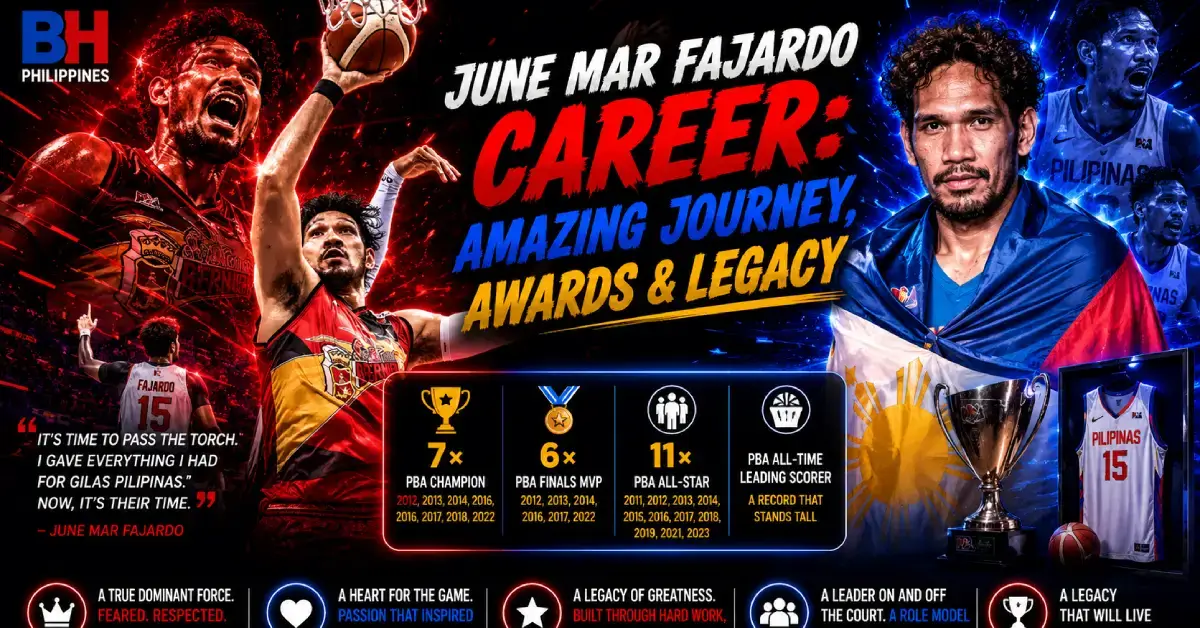
The June Mar Fajardo career is one of the most accomplished stories in modern Philippine

Kai Sotto’s NBA case starts with a physical profile that immediately gets attention: exceptional height,

Who are the PBA Most Improved Players? The PBA Most Improved Player (MIP) award recognizes

Basketball fans in the Philippines often ask: who are the best PBA defensive players? The

When people ask “how tall is Bob Pettit?”, the quick answer is this:Bob Pettit stood

What Is Dikembe Mutombo’s Height? Dikembe Mutombo stood at 7 feet 2 inches (2.18 meters),

What Was Dominique Wilkins’ Actual Vertical Leap? Dominique Wilkins’ vertical is one of the most

How Tall Is Dominique Wilkins? Dominique Wilkins stands 6 feet 8 inches (2.03 meters) tall

Who is Bob Pettit MVP and Why Is He Important? The term bob pettit mvp

A basketball player career can begin on a neighborhood court, in a school program, or through organized youth basketball and eventually lead to collegiate, professional, or international competition. However, becoming a professional player requires much more than scoring ability. Skill development, basketball IQ, physical preparation, discipline, teamwork, competition experience, and the right opportunities all play important roles.
For Filipino players, possible pathways can include school basketball, collegiate competition, the PBA, overseas leagues, and the Gilas Pilipinas program.
A basketball player career is the journey an athlete takes from learning the game to competing at increasingly higher levels.
Some players begin playing casually before joining organized teams. Others enter basketball programs at a young age and compete through school leagues and tournaments.
There is no single route.
A player’s journey can include youth basketball, high school, college, semi-professional competition, professional leagues, national-team basketball, and international opportunities.
Some careers last many years, while others are shorter because of injuries, roster changes, personal decisions, or other circumstances.
Understanding this progression helps young basketball fans set realistic goals while appreciating the work required at every stage.
Most players begin by learning the fundamentals.
Ball handling, passing, shooting, footwork, rebounding, and defensive positioning form the foundation of basketball development.
As players improve, they begin learning more advanced concepts such as pick-and-roll execution, spacing, help defense, closeouts, transition offense, screening, and defensive rotations.
Playing organized basketball is also valuable because it teaches players how to make decisions under pressure.
A player might have excellent shooting ability during individual practice but struggle to create open shots against a live defense. Game experience helps bridge that gap.
For young Filipino players, school teams, community leagues, development programs, and properly organized competitions can provide opportunities to gain experience.
The goal should be steady development rather than rushing toward a professional contract.
A player pursuing a professional basketball career needs to develop both physical and mental skills.
Technical development includes shooting consistency, ball handling, passing accuracy, finishing, defensive footwork, and rebounding technique.
Basketball IQ becomes increasingly important at higher levels.
Players must understand spacing, defensive rotations, offensive sets, tempo, matchups, and situational basketball.
Coaches also look for players who understand their role.
A player does not have to be the team’s leading scorer to become valuable. Strong defenders, rebounders, screeners, playmakers, shooters, and versatile role players can all have important careers.
Consistency matters too.
Coaches need players who can execute their responsibilities from game to game rather than only producing occasional spectacular performances.
An NBA player career represents one of the highest levels of professional basketball.
Players can reach the NBA through different routes, including the NBA Draft, development opportunities, international basketball, and other professional pathways.
Once in the league, maintaining a career requires continuous development.
NBA players face elite competition every night. Opponents study tendencies, defensive schemes change, and roster roles can evolve throughout a season.
A young player may initially have limited minutes before earning a larger role.
Veteran players may adjust their games as athletic ability changes with age.
This is why an NBA player career is not simply about reaching the league. Longevity depends on adapting to new challenges and continuing to provide value.
A PBA player career provides a major professional pathway for Filipino basketball players.
Players can develop through collegiate basketball, amateur competition, developmental programs, and other routes before reaching the professional level.
Once in the PBA, players must adjust to the physical and tactical demands of professional competition.
A rookie may need to learn from veterans while adapting to a team’s offensive system and defensive scheme.
PBA players can also experience different roles throughout their careers.
A player might begin as a role player, earn more minutes through strong defense or shooting, and eventually become an important starter.
Others may specialize in particular skills that make them valuable to specific lineups.
The PBA can also provide a pathway toward national-team opportunities for players who become important contributors.
A Gilas Pilipinas player career can involve representing the Philippines in international basketball while also maintaining a professional club career.
National-team basketball is different from league basketball.
Players from different teams must quickly develop chemistry, learn systems, and adapt to international opponents.
A Gilas player may compete against teams with different styles, physical profiles, and tactical approaches.
International experience can therefore help players develop their basketball IQ and versatility.
Representing the Philippines is also a significant responsibility. Players must balance individual performance with the needs of the national team.
A strong national-team career is often built on consistency, teamwork, defensive commitment, and the ability to perform against high-level international competition.
An international basketball career can take players to leagues and competitions outside their home country.
Asia, Europe, Australia, and other regions have professional basketball opportunities.
Playing overseas can expose athletes to different coaching systems, teammates, rules, and styles of basketball.
For Filipino players, international opportunities can provide valuable experience while expanding their professional careers.
However, moving to another country for basketball requires preparation beyond athletic ability.
Players may need to adjust to a new culture, language, playing system, schedule, and lifestyle.
Professional organizations also evaluate reliability, professionalism, teamwork, and adaptability.
A professional basketball career requires continuous improvement.
Players must take care of their physical preparation, recovery, nutrition, sleep, and overall well-being while following appropriate guidance from qualified professionals.
Mental preparation is equally important.
Basketball involves mistakes. A player can miss a shot, commit a turnover, lose a defensive assignment, or struggle through a poor game.
The ability to learn from mistakes and remain focused is part of professional development.
Players should also understand the importance of education and life skills.
A basketball career can change unexpectedly, so developing communication, financial awareness, education, and other transferable skills is valuable.
The strongest athletes prepare for basketball while also preparing for life beyond basketball.
A basketball player career is built over time. From learning basic footwork and shooting to understanding complex defensive rotations and offensive systems, every stage contributes to a player’s development.
For Filipino athletes, the journey can lead through school and collegiate basketball toward a PBA player career, Gilas Pilipinas opportunities, or an international basketball career. Others may pursue the NBA or different professional leagues around the world.
The important lesson is to focus on development rather than shortcuts.
Build strong fundamentals, become a reliable teammate, understand the game, gain quality competition experience, and continue learning.
A successful basketball career is not defined by one highlight or one game. It is built through consistent work over many seasons.
What part of a basketball player career interests you most?
Are you interested in the NBA, PBA, Gilas Pilipinas, collegiate basketball, or an international basketball career?
Share your basketball goals and opinions with fellow Filipino fans.
Visit the BasketballHubPH store for basketball-themed general merchandise, including basketball T-shirts and basketball wall art, plus jerseys and other basketball products.
Follow BasketballHubPH on social media for more basketball content, player stories, career discussions, and updates from the Philippines and around the world.
There is no fixed length. Careers can last a few seasons or several decades depending on performance, health, opportunity, league demand, and personal decisions.
Begin by developing fundamental skills, playing organized basketball, learning from qualified coaches, gaining competition experience, and gradually progressing to stronger levels of competition.
Yes. Filipino and Filipino-heritage athletes can pursue professional basketball opportunities, although NBA eligibility and player pathways depend on applicable league rules and individual circumstances.
Yes. PBA players can be selected for Gilas Pilipinas depending on eligibility, roster decisions, availability, coaching choices, and the requirements of a particular competition.
Yes. An international basketball career can involve professional leagues in Asia, Europe, Australia, and other regions. Opportunities depend on skill level, eligibility, contracts, and team requirements.